


Vegan Bibimbap is more than just a meal; it’s a vibrant knon-alcoholic aleidoscope of textures, flavors, and colors that promises a truly satisfying experience. This Korean masterpiece, traditionally a rice bowl topped with an array of meticulously prepared vegetables, marinated protein, and a luscious fried egg, has been artfully transformed into a plant-based wonder. What makes vegan bibimbap so utterly irresistible? It’s the delightful harmony achieved when each individual component shines, from the crispness of blanched greens to the earthy depth of seasoned mushrooms and the sweet tang of gochujang sauce. This isn’t simply about replacing ingredients; it’s about celebrating the inherent deliciousness of fresh produce and wholesome grains. Prepare yourself to fall in love with this beautifully balanced and incredibly nourishing dish, proving that ethical eating can be extraordinarily flavorful.

Ingredients:
- 1 large cucumber
- 200 grams fresh spinach
- 100 grams bean sprouts
- 1 large carrot
- 200 grams firm tofu
- 100 grams mushrooms of your choice (enoki mushrooms were used for this recipe)
- Salt to taste
- Sesame oil for cooking and finishing
- Minced garlic (for marinades and seasoning)
- 2 tablespoons gochujang (Korean chili paste)
- 1 tablespoon rice vinegar
- 1 tablespoon agave syrup or maple syrup (for sweetness)
- 1 tablespoon soy sauce
- 2 cloves garlic, minced
- 2 teaspoons sesame oil (for the sauce)
Preparing the Vegetables
Cucumber Preparation
Start by preparing your cucumber. Wash it thoroughly under cool running water. Then, trim off both ends. You can peel the cucumber if you prefer a softer texture, but leaving the skin on adds a nice crunch and extra nutrients. Slice the cucumber into thin matchsticks, about 1/8 inch thick. This uniformity in size ensures they cook evenly if you choose to lightly sauté them, or will be uniformly crisp if served raw. In a small bowl, toss the cucumber matchsticks with a pinch of salt. Let them sit for about 10-15 minutes. This process, known as salting, will draw out some of the excess moisture, preventing them from making your bibimbap watery. After 15 minutes, gently squeeze out any accumulated liquid from the cucumber. You can then set them aside for assembly.
Spinach Blanching
Next, we’ll prepare the spinach. Wash the spinach leaves very well, as they can sometimes hold grit. Bring a medium pot of water to a rolling boil. Add a generous pinch of salt to the boiling water – this helps to season the spinach as it cooks. Carefully add the spinach to the boiling water. You only need to blanch it for about 30-60 seconds, just until the leaves wilt and turn a vibrant green. Overcooking will make the spinach mushy. Immediately remove the spinach from the boiling water using a slotted spoon or a spider strainer and plunge it into a bowl of ice water. This rapid cooling stops the cooking process, preserving its bright color and crisp-tender texture. Once cooled, drain the spinach thoroughly. Gently squeeze out as much excess water as possible. In a bowl, toss the blanched spinach with a teaspoon of minced garlic and a teaspoon of sesame oil. Season with a small pinch of salt to taste.
Bean Sprout Blanching
The bean sprouts require a similar treatment to the spinach. Rinse the bean sprouts under cold water and pick out any loose skins or debris. Bring another pot of water to a boil, adding a pinch of salt. Add the bean sprouts to the boiling water and cook for just 1-2 minutes, until they are slightly tender but still have a pleasant crunch. Like the spinach, you want to avoid overcooking them. Drain the bean sprouts and rinse them under cold water to cool them down. Squeeze out any excess moisture. In a separate bowl, season the bean sprouts with a teaspoon of minced garlic and a teaspoon of sesame oil. A tiny pinch of salt can also be added if desired. These simple seasonings enhance their natural flavor without overpowering them.
Carrot Julienne and Sauté
For the carrot, wash it and peel it. Trim off both ends. Using a sharp knife or a mandoline, cut the carrot into thin matchsticks, similar in size to the cucumber. To give the carrots a bit of sweetness and tenderize them slightly, we’ll give them a quick sauté. Heat a tablespoon of sesame oil in a non-stick skillet over medium heat. Add the julienned carrots to the hot oil. Cook, stirring frequently, for about 3-5 minutes, or until the carrots are tender-crisp. You want them cooked through but still retaining a slight bite. Season with a pinch of salt as they cook. Once tender, remove the carrots from the skillet and set them aside.
Mushroom Sauté
If you’re using enoki mushrooms, gently separate the cluster into smaller pieces. If using other mushrooms, slice them thinly. Heat another tablespoon of sesame oil in the same skillet over medium-high heat. Add the mushrooms and cook for about 3-5 minutes, stirring occasionally, until they are tender and have released their moisture. Mushrooms are great at absorbing flavor, so this quick sauté allows them to develop a nice savory note. Season with a pinch of salt and a tiny bit of minced garlic in the last minute of cooking. Once cooked, remove the mushrooms from the skillet and set them aside.
Preparing the Tofu
Tofu Pressing and Slicing
Firm tofu is crucial for this vegan bibimbap recipe as it holds its shape well. It’s important to press the tofu to remove excess water. You can do this by wrapping the tofu block in paper towels or a clean kitchen towel and placing something heavy on top, like a few cookbooks or a cast-iron pan, for at least 15-30 minutes. The longer you press it, the firmer it will become. Once pressed, cut the tofu into bite-sized cubes or thin rectangular slices, approximately 1/2 inch thick.
Tofu Searing
Heat a tablespoon of sesame oil in a non-stick skillet over medium-high heat. Carefully add the tofu pieces in a single layer, making sure not to overcrowd the pan. You may need to cook them in batches. Sear the tofu for about 4-5 minutes per side, until it’s golden brown and nicely crisped. This searing process gives the tofu a delicious texture and a slightly nutty flavor. Once all sides are golden brown, remove the tofu from the skillet and set it aside. You can optionally toss the seared tofu with a splash of soy sauce and a tiny pinch of minced garlic for extra flavor, but this is entirely up to your preference.
Making the Bibimbap Sauce
In a small bowl, whisk together the gochujang, soy sauce, rice vinegar, agave or maple syrup, and the 2 teaspoons of sesame oil. Add the minced garlic (from the 2 cloves). Stir until all the ingredients are well combined and the sauce is smooth. Taste and adjust seasoning as needed – you might want a little more sweetness or a touch more vinegar depending on your preference. This spicy-sweet and savory sauce is the heart of the bibimbap, bringin extractg all the flavors together.
Assembling Your Vegan Bibimbap
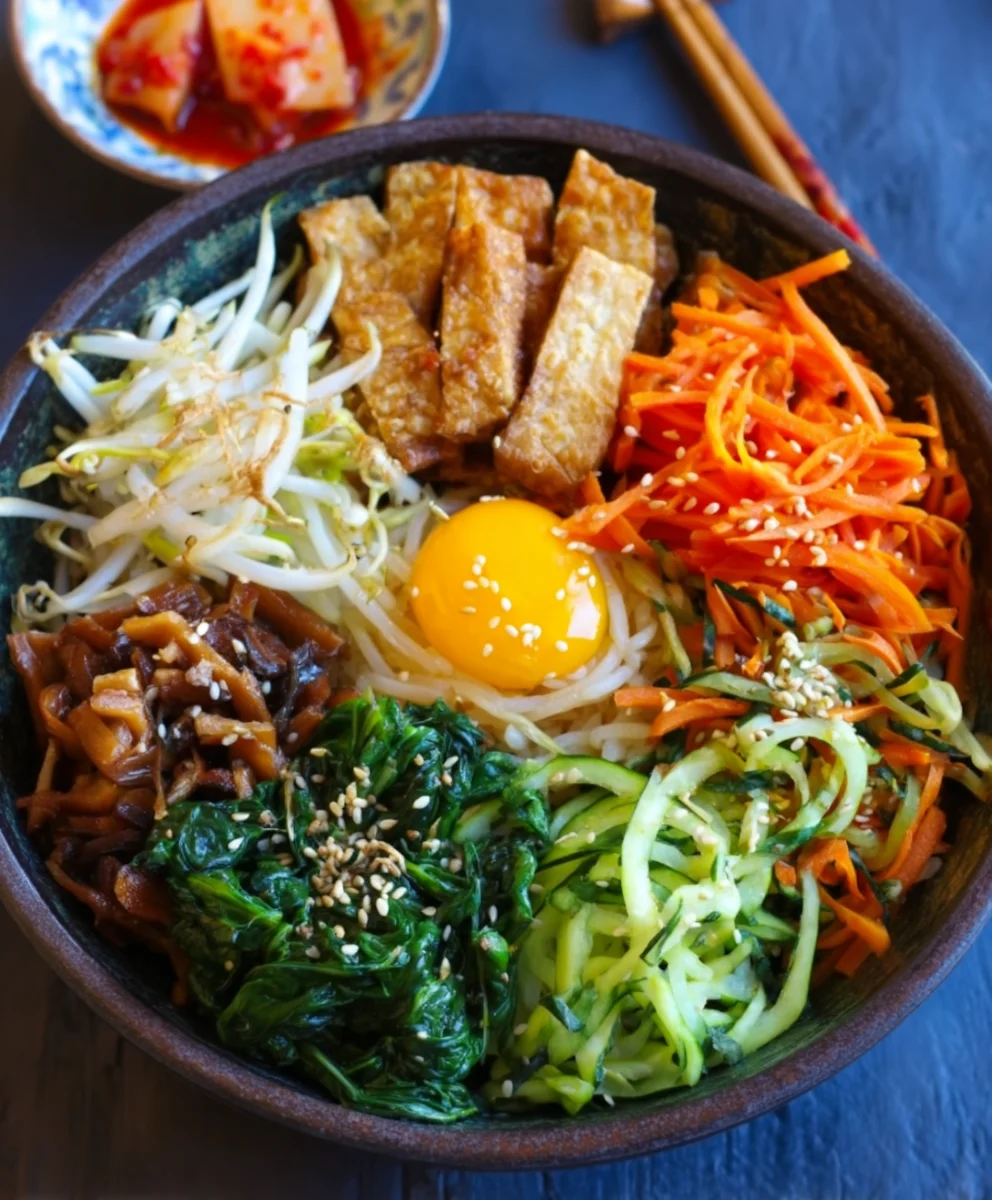
To assemble your bibimbap, it’s traditional to serve it in a large bowl. You can optionally warm a bowl of cooked rice and place it at the bottom. Arrange the prepared vegetables and tofu attractively on top of the rice. Create sections for each ingredient, placing the cucumber, spinach, bean sprouts, carrots, mushrooms, and seared tofu in distinct piles around the bowl. This visual appeal is a key part of the bibimbap experience. Drizzle a little extra sesame oil over the top if you like, and serve the bibimbap sauce on the side, allowing each person to add as much or as little as they desire. For an even more authentic experience, you can crack a raw egg yolk on top of the rice before adding the toppings, but since this is a vegan recipe, we’ll omit that. Enjoy mixing all the delicious components together with your spoon before diving in!
Conclusion:
There you have it – a comprehensive guide to creating your very own delicious and satisfying Vegan Bibimbap! We’ve walked through each step, from preparing the perfectly seasoned tofu and vibrant vegetables to crafting that essential gochujang sauce. This dish is a true celebration of flavors and textures, offering a wholesome and plant-based meal that’s as beautiful to look at as it is to eat. Remember, the beauty of Vegan Bibimbap lies in its adaptability, so feel free to experiment with your favorite seasonal produce.
Serve your Vegan Bibimbap piping hot, ensuring each component is artfully arranged in the bowl. A drizzle of toasted sesame oil right before serving adds an extra layer of aromatic delight. For a truly authentic experience, offer extra gochujang sauce on the side for those who like a bit more heat. This dish is fantastic on its own, or you can pair it with a light, clear vegetable broth soup.
Don’t be afraid to get creative with your vegetable choices! Bell peppers, zucchini, spinach, mushrooms, and shredded carrots are all excellent additions. You can also swap the tofu for tempeh or even seasoned chickpeas for a protein boost. The possibilities are endless, making Vegan Bibimbap a go-to recipe for any occasion. We hope you enjoy making and savoring this incredible meal!
Frequently Asked Questions:
Can I make the Vegan Bibimbap ahead of time?
Yes, you can prepare many of the components of your Vegan Bibimbap in advance. The vegetables can be sautéed and stored separately in airtight containers in the refrigerator for up to 2-3 days. The tofu can also be cooked ahead. The rice is best made fresh, but you can reheat cooked rice. The gochujang sauce can also be made a few days in advance and stored in the fridge. When ready to serve, simply reheat the components and assemble your bowls!
What kind of rice is best for Vegan Bibimbap?
Short-grain or medium-grain white rice is traditionally used and provides a slightly sticky texture that holds the toppings well. However, you can absolutely use brown rice or even a multi-grain rice blend for a healthier option. Just ensure the rice is cooked until tender and slightly firm.
Easy Vegan Bibimbap Recipe- Delicious Plant-Based Bowl
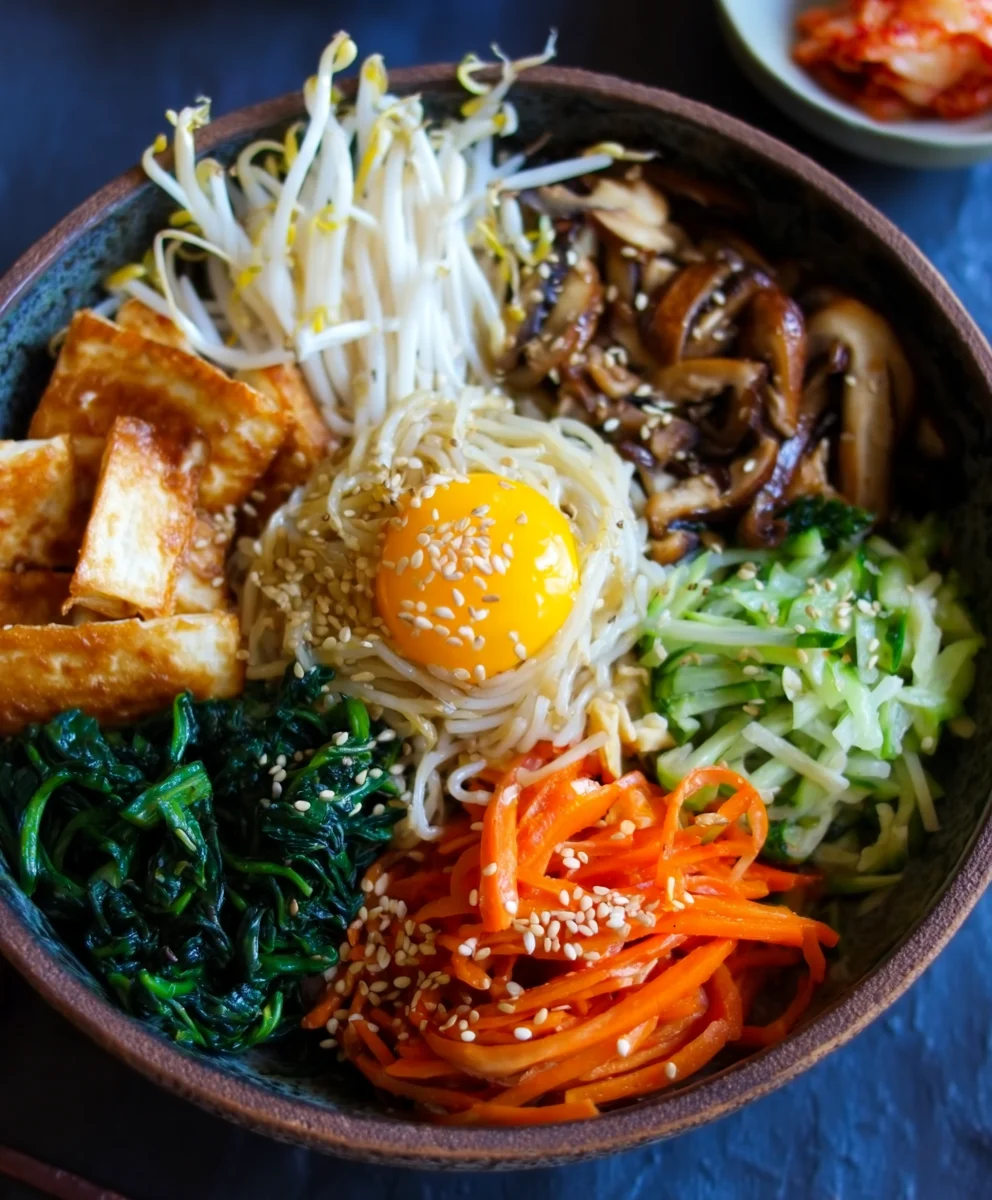
A vibrant and flavorful vegan bibimbap featuring a colorful medley of fresh vegetables, perfectly seared tofu, and a delicious spicy-sweet gochujang sauce. This plant-based bowl is satisfying and visually appealing.
Ingredients
-
1 large cucumber, thinly sliced
-
200 grams fresh spinach
-
100 grams bean sprouts
-
1 large carrot, julienned
-
200 grams firm tofu, pressed and cubed
-
100 grams mushrooms of your choice (enoki mushrooms used)
-
Salt to taste
-
Sesame oil for cooking and finishing
-
Minced garlic
-
2 tablespoons gochujang
-
1 tablespoon rice vinegar
-
1 tablespoon agave syrup or maple syrup
-
1 tablespoon soy sauce
-
2 cloves garlic, minced
-
2 teaspoons sesame oil (for the sauce)
Instructions
-
Step 1
Prepare the vegetables: Slice cucumber into matchsticks and lightly salt, then squeeze out excess moisture. Blanch spinach for 30-60 seconds, shock in ice water, drain, and toss with garlic and sesame oil. Blanch bean sprouts for 1-2 minutes, cool, drain, and toss with garlic and sesame oil. Julienne carrots and sauté in sesame oil until tender-crisp. Sauté mushrooms until tender and seasoned with garlic and salt. -
Step 2
Prepare the tofu: Press firm tofu to remove excess water, then cut into bite-sized pieces. Sear tofu in sesame oil until golden brown and crispy on all sides. -
Step 3
Make the bibimbap sauce: Whisk together gochujang, soy sauce, rice vinegar, agave or maple syrup, minced garlic, and 2 teaspoons of sesame oil until smooth. Adjust seasoning to taste. -
Step 4
Assemble the bibimbap: Place a bowl of cooked rice at the bottom of a large serving bowl. Arrange the prepared vegetables (cucumber, spinach, bean sprouts, carrots, mushrooms) and seared tofu in distinct sections on top of the rice. -
Step 5
Finish and serve: Drizzle with a little extra sesame oil if desired. Serve the bibimbap sauce on the side, allowing individuals to add their desired amount. Mix all components together before eating.
Important Information
Nutrition Facts (Per Serving)
It is important to consider this information as approximate and not to use it as definitive health advice.
Allergy Information
Please check ingredients for potential allergens and consult a health professional if in doubt.


Leave a Comment