


Cabbage Roll Soup is more than just a meal; it’s a warm hug in a bowl, a symphony of comforting flavors that transports you straight to grandma’s kitchen. Who doesn’t love the idea of deconstructed cabbage rolls, simmered into a rich, savory broth? This isn’t your average weeknight dinner; it’s an experience. We adore this dish because it captures all the essence of traditional stuffed cabbage rolls – tender ground meat, slightly softened cabbage, and the sweet tang of tomato – but in a much more accessible and less time-consuming format. What truly sets this Cabbage Roll Soup apart is the incredible depth of flavor achieved through simple ingredients and a gentle simmer, allowing the sweet cabbage and savory aromatics to meld perfectly.
Why You’ll Adore This Recipe:
Forget the fuss of individually stuffing and rolling. This recipe makes the beloved flavors of cabbage rolls achievable for anyone, any night of the week. The aroma alone will have your family gathering in the kitchen, eager for their first taste. It’s a hearty, satisfying soup that feels both rustic and refined, perfect for a chilly evening or a comforting lunch.
The Magic of Cabbage Roll Soup:
The beauty of this soup lies in its simplicity and its ability to transform humble ingredients into something truly extraordinary. The combination of lean ground beef, sweet onions, aromatic garlic, tender shredded cabbage, and a rich tomato-based broth creates a flavor profile that is undeniably delicious. We’ve perfected a method that ensures every spoonful is packed with that classic, beloved cabbage roll taste, without any of the rolling effort. It’s a testament to how simple, wholesome ingredients can create pure culinary magic.

Ingredients:
- 2 tsp. vegetable oil
- 1 lb. lean ground beef
- Salt and pepper to taste
- 1 medium yellow onion (diced finely)
- 2 cloves garlic (minced)
- 4 cups chopped green cabbage (about half a medium head)
- 2 medium carrots (quartered and sliced)
- 4 cups low-sodium beef broth
- 3 8 oz. cans tomato sauce
- 1/2 cup white rice (uncooked)
- 1 bay leaf
- 3 tbsp. light brown sugar
- 2 tbsp. fresh chopped parsley
Cooking the Base
Browning the Beef and Aromatics
- Heat the vegetable oil in a large pot or Dutch oven over medium-high heat. Once the oil is shimmering, add the lean ground beef. Break up the meat with a spoon and cook until it’s browned all over, about 5-7 minutes. It’s important to get a good sear on the beef to develop flavor. As it cooks, season generously with salt and pepper. Once the beef is browned, drain off any excess grease. This step is crucial for a cleaner, less oily soup.
- Add the finely diced yellow onion to the pot with the browned beef. Cook, stirring occasionally, until the onion is softened and translucent, which should take about 5-7 minutes. You’re looking for it to become tender and slightly sweet. Then, stir in the minced garlic and cook for another minute until fragrant. Be careful not to burn the garlic, as this can make it bitter.
Building the Soup
Adding Vegetables and Liquids
- Now it’s time to introduce the hearty vegetables. Add the chopped green cabbage and the quartered and sliced carrots to the pot. Stir everything together, allowing the vegetables to mingle with the beef and aromatics for a couple of minutes. This brief sauté helps to slightly soften the vegetables and release some of their natural sweetness.
- Pour in the low-sodium beef broth and the three 8 oz. cans of tomato sauce. Stir well to combine all the ingredients. Make sure to scrape the bottom of the pot to loosen any browned bits, as these contain a lot of flavor. Add the uncooked white rice. The rice will absorb some of the liquid as it cooks, contributing to the soup’s thickness and heartiness. Finally, tuck in the bay leaf.
Simmering and Finishing
Developing Flavors
- Bring the soup to a boil over medium-high heat, then reduce the heat to low, cover the pot, and let it simmer gently. This simmering process is where all the flavors meld together beautifully. Allow it to cook for at least 30 minutes, or until the rice is tender and the vegetables are cooked through. Stir occasionally to prevent the rice from sticking to the bottom of the pot. For an even deeper flavor, you can let it simmer for up to an hour.
- Once the rice and vegetables are tender, stir in the light brown sugar. The sugar is a secret ingredient that balances the acidity of the tomato sauce and enhances the overall flavor profile of the soup, giving it a subtle sweetness reminiscent of traditional cabbage rolls. Let the soup simmer for another 5 minutes to allow the sugar to dissolve completely.
- Before serving, remove and discard the bay leaf. Taste the soup and adjust the seasoning with additional salt and pepper if needed. Stir in the fresh chopped parsley just before serving. The parsley adds a burst of freshness and a lovely vibrant color to the finished dish. Ladle the hot Cabbage Roll Soup into bowls and enjoy this comforting and flavorful meal!

Conclusion:
There you have it! Your delicious and comforting bowl of Cabbage Roll Soup is ready to be enjoyed. This recipe is a hearty and flavorful way to experience all the classic tastes of traditional cabbage rolls without all the fuss of rolling. The combination of tender cabbage, savory ground meat, rice, and a rich tomato broth creates a deeply satisfying meal that’s perfect for a chilly evening or a wholesome lunch. I hope you loved making this Cabbage Roll Soup as much as I do!
To elevate your Cabbage Roll Soup experience, consider serving it with a dollop of sour cream or a sprinkle of fresh dill for an extra burst of flavor. Crusty bread is also an excellent companion for soaking up every last drop of that delicious broth. Feel free to get creative with this recipe! For a vegetarian version, you can swap the ground beef for lentils or plant-based crum extractbles. If you’re a fan of a little heat, add a pinch of red pepper flakes to the broth. Don’t be afraid to experiment and make this Cabbage Roll Soup your own. Happy cooking!
Frequently Asked Questions about Cabbage Roll Soup:
Can I make this Cabbage Roll Soup ahead of time?
Absolutely! In fact, Cabbage Roll Soup often tastes even better the next day as the flavors have more time to meld together. You can store it in an airtight container in the refrigerator for up to 3-4 days. Reheat gently on the stovetop.
What kind of ground meat is best for Cabbage Roll Soup?
While the recipe calls for ground beef, you can use a blend of ground beef and beef for added richness. Ground turkey or chicken are also good, leaner alternatives. Just be mindful that they might alter the overall flavor profile slightly.
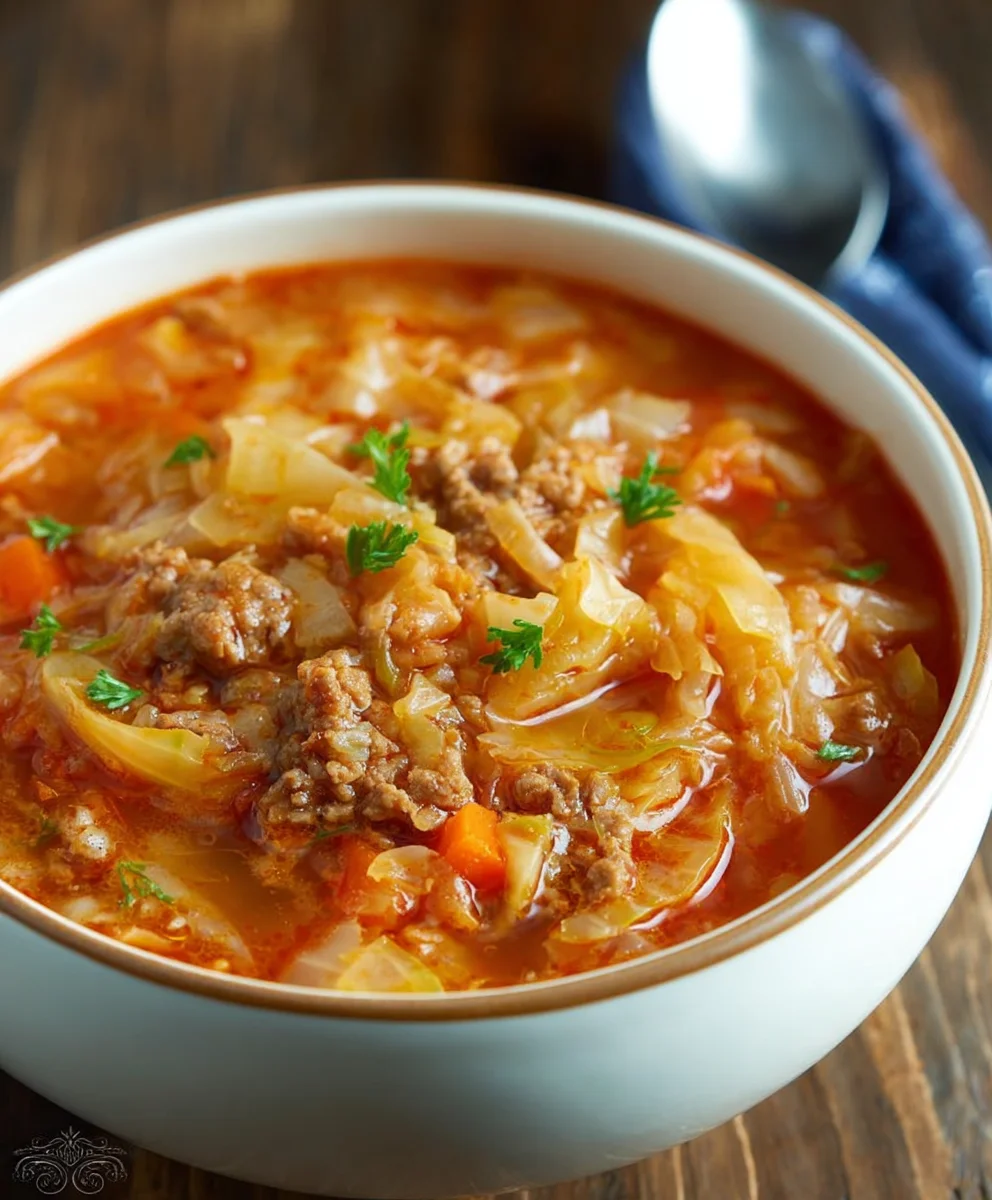
Hearty Cabbage Roll Soup
An easy and flavorful beef and tomato soup that captures the essence of traditional cabbage rolls in a comforting, liquid form.
Ingredients
-
2 tsp. vegetable oil
-
1 lb. lean ground beef
-
Salt and pepper to taste
-
1 medium yellow onion, finely diced
-
2 cloves garlic, minced
-
4 cups chopped green cabbage
-
2 medium carrots, quartered and sliced
-
4 cups low-sodium beef broth
-
3 8 oz. cans tomato sauce
-
1/2 cup uncooked white rice
-
1 bay leaf
-
3 tbsp. light brown sugar
-
2 tbsp. fresh chopped parsley
Instructions
-
Step 1
Heat vegetable oil in a large pot over medium-high heat. Add ground beef, season with salt and pepper, and cook until browned, about 5-7 minutes. Drain excess grease. -
Step 2
Add diced onion to the pot and cook until softened, about 5-7 minutes. Stir in minced garlic and cook for 1 minute until fragrant. -
Step 3
Add chopped cabbage and sliced carrots to the pot. Stir and cook for a couple of minutes. -
Step 4
Pour in beef broth and tomato sauce. Stir to combine, scraping the bottom of the pot. Add uncooked rice and the bay leaf. -
Step 5
Bring soup to a boil, then reduce heat to low, cover, and simmer for at least 30 minutes, or until rice and vegetables are tender. Stir occasionally. -
Step 6
Stir in light brown sugar and simmer for another 5 minutes. Remove and discard the bay leaf. Adjust seasoning with salt and pepper if needed. Stir in fresh parsley before serving.
Important Information
Nutrition Facts (Per Serving)
It is important to consider this information as approximate and not to use it as definitive health advice.
Allergy Information
Please check ingredients for potential allergens and consult a health professional if in doubt.



Leave a Comment